Must Know Differences Between Budget and Premium Tyres
- Arthur Wilson
- May 16
- 4 min read

Every day, many vehicle owners go out to buy a new set of tyres for their vehicles, and a majority of them face issues making a similar decision. It is regarding the amount they should spend on tyres and whether they should go for premium tyres from well-known brands or make a better financial decision by choosing a budget alternative that can meet the basic necessities at a much lower price.
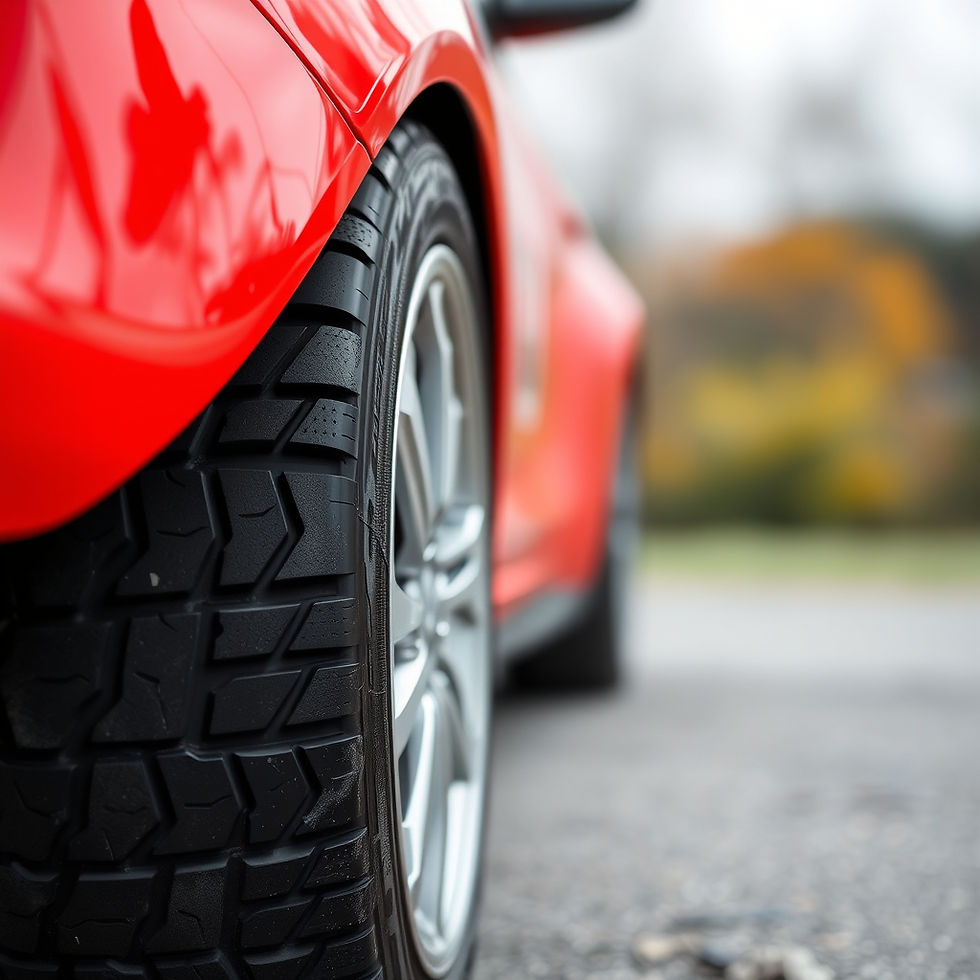
This decision is confusing for millions of drivers across the United Kingdom, and the main reason is that they do not have complete information or are not properly educated about tyres.
With tyres being quite a crucial part of a vehicle, it is necessary for drivers to understand the difference between budget and premium tyres and make an informed decision. That is what this blog post is going to help them with. So, let’s start with the blog post and understand, between budget and premium tyres, which are the best ones for a vehicle.
Premium Tyres: The Standout Product in the Tyre Market
The most basic difference between budget and premium tyres occurs long before the tyre is available on the market. The difference begins during the tyre production process. Tyre manufacturers like Continental, Michelin, Bridgestone, Dunlop, and Pirelli invest a large amount of their resources in the research and development of their premium tyres.
They have a dedicated team of engineers, a team for material development and a special team for tyre testing to ensure that they are able to meet the performance standard for which they will be made. This investment directly impacts the performance that the tyres will deliver on the road.
Another significant part that most budget car tyre Birmingham manufacturers don’t work on is the development of the rubber compound used in tyre manufacturing. To ensure that a precise rubber compound can be developed, premium tyre manufacturers spend many years doing so.
They will use the rubber compound, which offers a perfect balance between wet grip, dry grip, rolling resistance, and wear resistance. A majority of modern tyre manufacturers use silica-based compounds, which further enhance a vehicle’s performance as compared to budget tyres. The main focus of cheap tyre manufacturers is to minimise the cost of tyre production so they can offer drivers a set of tyres that is well under their budget.
Another key area where premium tyres shine is their tread design. It is the pattern on a tyre’s sidewall that consists of tread blocks, grooves, and sipes. Premium tyre manufacturers use skilled engineers to create an optimised tread pattern that can offer excellent water dispersal performance, even contact patch distribution and excellent grip generation. This feature is something that the budget tyres don’t have.
The Gap In Performance Between Cheap and Budget Tyres
The gap in performance is a crucial factor that many drivers consider when buying tyres. Many tests have consistently shown that there are major performance differences between premium and budget tyres in key safety areas such as wet braking distance, dry braking distance, handling, and aquaplaning resistance. One of the most significant factors among these is the wet braking distance, which grabs the attention of UK drivers who need it quite frequently.
When tested, we noted a difference of many miles between the wet braking performance of premium and cheap tyres. If the vehicle is driven at a modern speed of around 50 or 60 miles per hour, a several-metre difference in stopping distance can make a big difference between a vehicle that is completely safe to drive and one that might give up at any time.
A similar difference was also noted when it came to aquaplaning resistance. Premium tyres were able to maintain contact with the road surface at higher speeds and in deeper water as compared to budget tyres. Various handling tests have also shown that the tyre's response precision and predictability were quite different, especially during cornering and changing direction.
The Benefit of Choosing Mid-Budget Tyres
So, what can be the best solution for buyers who don’t have the budget for premium tyres but also don’t want to face the safety issues that budget tyres cause? The best thing they can do is to go for a set of good mid-budget tyres.
There are brands like Hankook, Falken, Kumho, Nexen, and Toyo that produce tyres whose performance is close to that of premium tyres, but the price is not that high. It can be an excellent performance option for drivers who mostly cover mixed urban, rural, and motorway roads.
Conclusion
Choosing between budget and premium tyres is not simply a matter of price but a decision that directly affects vehicle safety, handling, comfort, and long-term performance. Premium tyres are special because of the advanced research, high-quality rubber compounds, and carefully engineered tread designs used in their development.
This ensures that they deliver better grip, shorter braking distances, improved aquaplaning resistance, and a longer lifespan. Budget tyres are mainly designed to reduce manufacturing costs, which may result in lower performance in changing conditions.
However, the main point is to choose tyres in advance, taking into account factors such as driving habits, road conditions, and budget. Drivers should keep in mind that choosing the right tyres means safer journeys, better driving confidence, and improved value over the long term.


